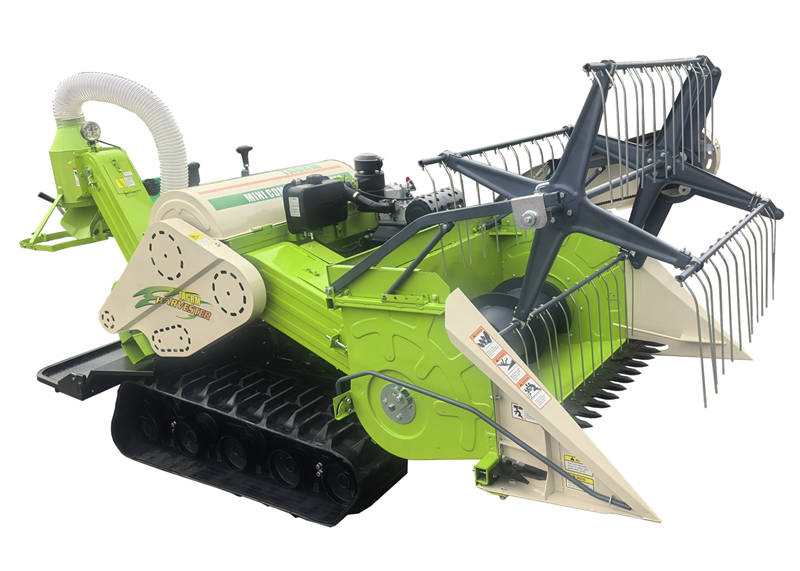
Since most of Southeast Asia has hilly and mountainous terrain, although large rice harvesters have high working efficiency, their passability in some remote mountainous areas is relatively poor. Farmers are not very accepting of them and even prefer to use hand tools for harvesting work. Now, with the emergence of small rice harvesters, this situation may change. Now let's discuss the current use status and challenges of small rice harvesters in Southeast Asia.
1. Country-Specific Adoption:
Thailand: Known for its strong agricultural sector, Thailand has seen significant adoption of mechanized rice harvesting. The government has supported this transition through various initiatives, including subsidies for machinery.
Vietnam: Mechanization in Vietnam's agriculture, including rice harvesting, has been on the rise. The government has implemented policies to encourage the use of modern machinery, aiming to improve efficiency and reduce post-harvest losses.
Indonesia: The adoption of small rice harvesters in Indonesia varies across regions. In areas with large-scale rice cultivation, there has been a notable shift toward mechanization, while in more remote or traditional farming regions, manual methods may still be prevalent.
2. Technology Trends:
Precision Farming: Some farmers in Southeast Asia are exploring precision farming techniques, incorporating technology to optimize the use of resources. This includes the use of GPS-guided rice harvesters for more precise and efficient harvesting.
3. Challenges and Solutions:
Cost Constraints: The initial cost of small rice harvesters can be a barrier for small-scale farmers. Government subsidies and financing options are often crucial in overcoming this challenge.
Terrain Challenges: In hilly areas, as in parts of Southeast Asia, specialized small rice harvesters with features like adjustable cutting heights and enhanced stability are essential. Innovations in design continue to address these challenges.
4. Socioeconomic Impact:
The adoption of small rice harvesters can have positive socioeconomic impacts by reducing labor-intensive tasks, freeing up time for farmers to engage in other activities or diversify their crops.
It may also contribute to rural development by creating opportunities for employment in the maintenance and operation of machinery.
5. Environmental Considerations:
The environmental impact of mechanized farming is an important consideration. Efforts are being made to develop and promote sustainable and eco-friendly harvesting practices, including the use of energy-efficient machinery.
6. Future Outlook:
The future of small rice harvesters in Southeast Asia is likely to involve further technological advancements, increased automation, and continued government support for mechanization initiatives.
Continued research and development in agricultural technology will play a crucial role in addressing challenges and improving the efficiency of small rice harvesters.