1. Water deficiency or too much water
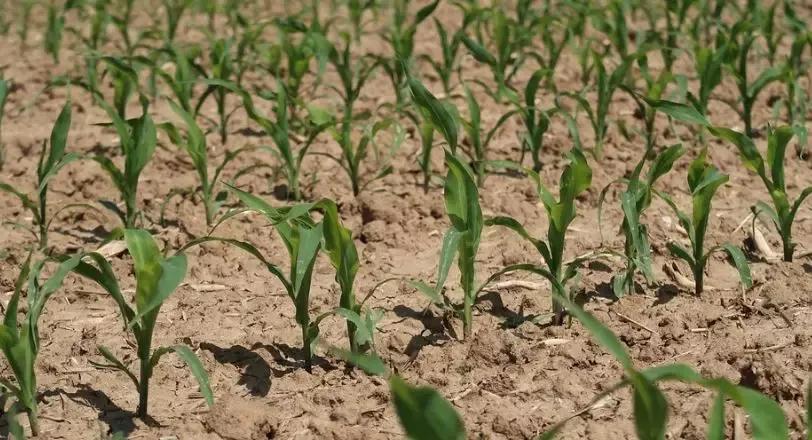
1.1 water deficiency or waterlogging when the upper leaves first appear curled, in the case of nitrogen fertilizer is still manifested as dwarf thin, leaf clusters become yellow-green, serious when the leaf edge or leaf tip becomes yellow, followed by the lower leaves of the leaf tip or leaf edge dry. This is due to the respiration of the corn root system and nutrient transfer being blocked, which leads to the yellowing of the leaves.
1.2 For this situation, irrigation and watering should be done in time for drought, drainage should be done in time for flooding, and if the damage is serious, re-seeding can be considered.
2. Lack of a certain nutrient element
2.1 Potassium deficiency yellow leaves, when potassium deficiency, old leaves begin to lose green and necrosis, gradually to the middle leaves, from the mature leaves of the leaf tip and edge fade green, first spot-like, and then even into a patch. When the potassium deficiency is serious, there are necrotic spots at the leaf tips and leaf edges, and the leaf edges dry up to form a burnt shape.For this situation, the base fertilizer without potassium fertilizer can be applied in the seedling stage with grass ash, and the serious potassium deficiency can be foliar sprayed with potassium dihydrogen phosphate or grass ash leaching solution.
2.2 zinc deficiency yellow leaves, corn is a zinc-loving crop, in corn 3-5 leaves, the new leaves in the middle of the leaf veins between the loss of green, easy to appear yellowish band area, after pulling the old leaves and diseased leaves in the veins also appear yellow-white stripes or both sides of the irregular yellow patches.
For this situation, apply 1.5 kg of zinc sulfate or 150 grams of zinc granules per mu, mixed with 15 kg of fine dry soil, and apply it in strips or holes from seedling to nodulation.
2.3 Sulfur deficiency yellow leaves, when the new leaves yellow first, then the stems and leaves become red, sometimes the new leaves are uniformly yellow, the leaf tips and leaf bases remain light green, and the old leaves are red at the base. The symptoms of sulfur deficiency are somewhat similar to those of nitrogen deficiency, but nitrogen deficiency is the first symptom to manifest on the old leaves, while sulfur deficiency is the first symptom to manifest on the young leaves because sulfur is not easily moved in corn.
For this situation, you can spray about 60 kg of 0.2% zinc sulfate solution per mu from seedling to nodulation, or follow up with potassium sulfate compound fertilizer, or foliar spray O.5% sulfate aqueous solution, about 15 kg per mu.
3. Pests and diseases
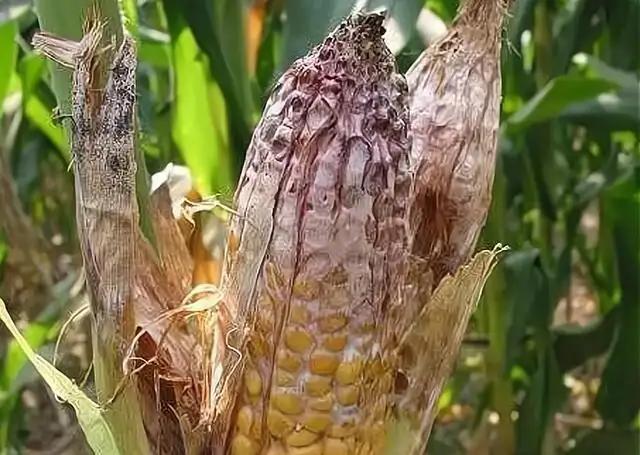
3.1 corn stalk rot and corn top rot, top rot heart leaves from the base of the leaves rotted dry, base rot corn lower leaves yellowing, such as the case of inter-node rot traces, the disease more than through the wound (goldenseal damage) has entered the corn stalk, the formation of the stalk base leaves dry rot and gradually upward development.
For this situation, you can do the following.
① timely control of underground pest golden needle insect, reduce root injury to prevent the pathogenic bacteria again invasion.② Increase the application of farmyard manure and potassium fertilizer and increase the application of nitrogen, phosphorus, and potassium compound fertilizer during the plucking period of corn to enhance the plant's resistance to disease, thus reducing the incidence.
③For the disease plots, use broad-spectrum fungicides for control, such as 50% carbendazim wettable powder 500 times uniform spray.
3.2 Corn seedling cultivated sunflower mealybug concentrates on the base of stems, roots, and leaf sheaths near the surface of corn seedlings with worm and female adults, absorbing sap and causing the affected corn leaf sheaths to yellow and dry up first.
In response to this situation, the following can be done.
①Increase fertilization and intensive cultivation and weeding, combined with fertilization and watering to change its survival conditions to control the expansion and spread.
② the insect after 2 years of the worm body surface attached to a layer of wax powder, adaptable, so the appropriate period of control in the 2-year-old worm before, generally in July or so. Can choose 40% oxynitride emulsifiable oil or 40% phoxim emulsifiable oil and another systemic insecticide 500-1000 times sprayed in the base of corn seedlings or irrigated root pre to control.
The main function of corn leaves is to carry out photosynthesis and transpiration but also has a certain absorption function, corn wants a high yield, protect the leaves is the key to management.