1. Land preparation
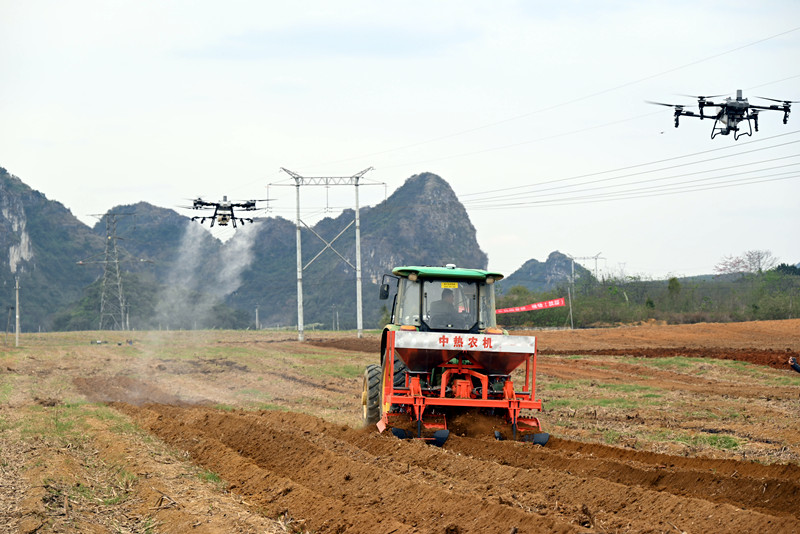
Cassava is a crop with extensive root systems. The development of the root system depends on deep, loose soil because it allows for more nutrient absorption, increased drought resistance, and root growth. Weathered and free of bugs that overwinter. Although equal-height furrows should be used for planting on slopes or areas with a slope of more than 15 degrees to prevent soil erosion, flat land can be planted without furrows. In addition, it is best to plant borders in depressions where the land is too wet or there is water.
2. Seed selection and cutting
The main stems of the seedlings should be free of illnesses and insect pests, have firm new leaves, complete bud points that are not dry, and be fully developed, thick, and densely jointed. The middle and lower seedlings of the main stem, followed by the higher part, are better in a stem than the branched seedlings, which are worse. The stem should have 4-5 bud tips and be 12–18 centimeters in length.
3. Planting method
Cassava can be planted in three different ways: flat laying, oblique insertion, and straight insertion. Each of the three approaches has benefits and drawbacks of its own. In general, lying flat can reduce labor costs and hasten the production of tubers. Although the horizontal distribution is simple to harvest, the sluggish germination rate makes it simple to run out of plants. This technique works well on land that has a thin topsoil and a solid subsoil. Fast seedling emergence and a high seedling rate are features of inclined insertion. Although it is easier to collect the tubers when they are stretched to one side because of this, it has poor wind resistance and is simple to lodge. High-humidity areas can employ this technique. Although they have early and orderly emergence, multi-directional tubers, deep soil, and great wind resistance, in-line seedlings are rarely used in large-scale production because of their unequal growth and challenging harvesting. They are only appropriate for deeply buried soil layers and very loose soil. In general, it is not advisable to use land with compacted soil.
Plastic film can also be used to plant cassava, and it generally increases productivity by around 50%. The dual-purpose method of one film, which entails planting cassava alongside film-filmed watermelons, film-filmed corn, and film-filmed peanuts, is also an option, and the effect of raising production is positive.
4. Planting density
The soil fertility and variety used determine the cassava planting density. Planting density is typically between 800 and 1000 plants per mu, with a row and plant spacing of 1 or 0.8 meters. The roots can be wider for kinds with rich soil or vigorous branching, and they can be put correctly for variations with poor soil or upright plants.
5. Fertilization
The basic idea behind fertilizing cassava is to use enough base fertilizer, a sensible top dressing, and a combined application of nitrogen, phosphorous, and potassium. Chemical fertilizers are typically used as topdressing fertilizers, while organic and phosphorus fertilizers are primarily used as base fertilizers. Strong seedling fertilizers, tuber fertilizers, and strong potato fertilizers are the three topdressing fertilizers typically applied two to three times. Nitrogen fertilizer, which is applied 30–40 days after planting and when the seedlings are 20–30 cm tall, is mostly used to grow strong seedlings. The primary fertilizer is potassium, while nitrogen fertilizer needs to be applied 60 to 80 days after planting. You can reapply a potent potato fertilizer if the soil is deficient, and the plant will grow
Apply between 90 and 120 days thereafter. The approach of applying all nutrients once a month after planting can also be used in actual production.
Cassava requires a lot of different nutrients, but nitrogen and potassium are the most important, followed by phosphate, calcium, and magnesium. In most regions of my nation where cassava is produced, the following are commonly advised for soil surveys:
Apply 100 kg of organic fertilizer per mu, 10-15 kg of urea, 10-30 kg of superphosphate, and 10-20 kg of potassium chloride in a balanced fertilization ratio of N: P205:K20=2:1:3.
6. Weeding and cultivating
Wide row spacing, slow initial development, prolonged seedling stage, and ease of weed growth are all characteristics of cassava plants. If weeding is not done promptly, cassava development will be significantly hampered. Typically, the initial winter tillage and weeding can be done 30 to 40 days after planting, when the seedling height is 15-20 cm. Perform the second weeding and cultivating 60 to 70 days after planting. Increase the frequency of weeding if the year has too much rain and the weeds are growing quickly. Cassava must be managed throughout its early growth period (three months after planting), and winter tillage wedding is the key to ensuring the yield of cassava.
7. Prevention and control of soil erosion
Early on, cassava develops slowly and has no vegetation on its surface. Planting on sloped ground will likely result in soil and water erosion, which will reduce soil fertility. Raising borders, planting vetiver strips, and intercropping peanuts and leguminous crops are all good ways to stop soil erosion in cassava fields. Cassava can even be planted on slopes with the use of these techniques. keep the land fertile.