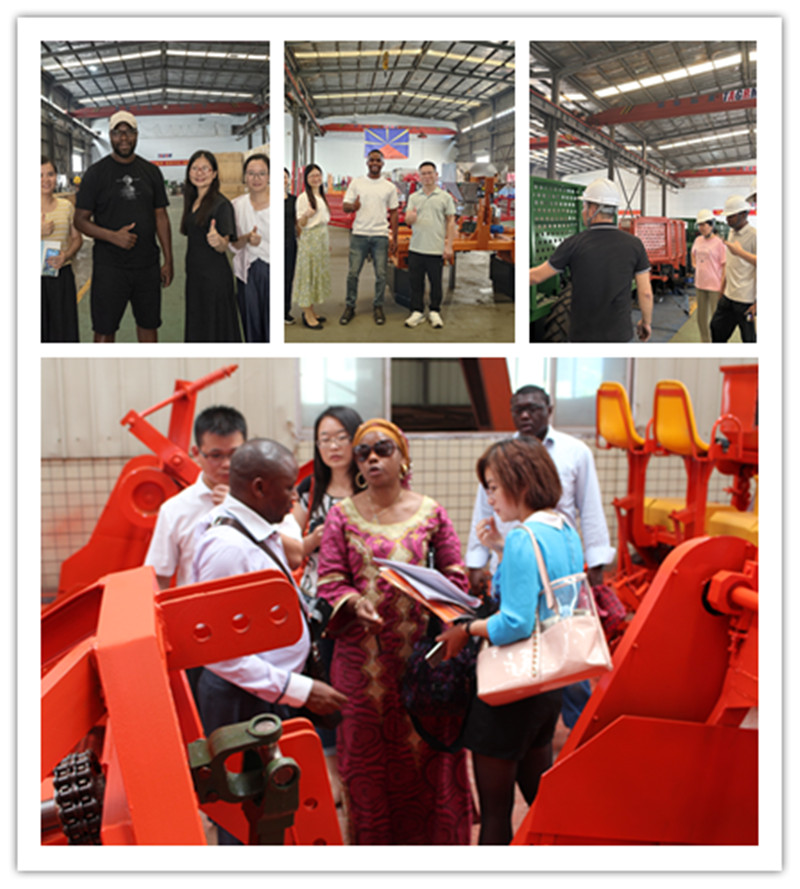
This has major significance. Visit a few previous owners of rice harvesters who have purchased and utilized them before you purchase one. They are the best experts on the rice harvester's performance, quality, service, availability of replacement parts, and profitability. Additionally, they will be well-versed in how other rice mill companies working in the neighborhood operate. Ask them respectfully, and you will gain a lot.
2. Visit the users who harvest rice with rice harvesters
After using a rice harvesting machine, users of rice planting can objectively and fairly assess the opportunity to harvest the rice in the plot, taking into account factors like the amount of loss, the grain impurity rate, the operation quality, the operation efficiency, whether a fault exists, and how the fault was fixed. Through visiting, you will get the most accurate scenario regarding waiting times, etc.
3. Directly see how the rice mill is in action
Focus further on the rice harvesters in your area to determine which brand and model are most prevalent and which brand and model are most used by drivers and planters. To grasp the actual operation scenario, it is required to visit the operation site, view the situation there, and engage in further conversation with the driver and grower.
4. Selection of rice machine manufacturers
You have already gained a foundational grasp of the rice machine through the three assignments mentioned above. There are now far too many rice machine manufacturers, so keep that in mind while making your decision. Whom do you believe? It is advised to select some reputable manufacturers. Regarding the product quality, after-sales support, and availability of replacement parts, the brand of the rice machine is generally good.
5. Selection of the feeding amount of the rice machine
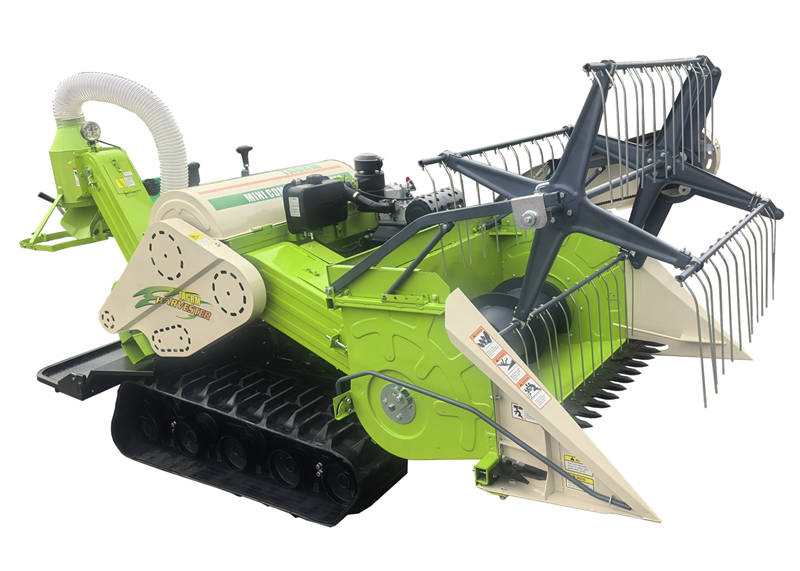
Rice machines are increasingly being fed in big quantities. According to sales information for rice mills in the first half of 2017 and 2018, the model with a feeding volume of 5 kg is growing in popularity and is starting to become the norm. However, the particular model purchased needs to be paired with the regional The actual scenario, adjusts to the local field: The size of the rice machine should be tailored to the scope of the nearby environment. A bigger model should be used if the field is level, and large, and the height difference is minimal; if the field is tiny and dispersed, the mini rice harvester should be chosen. Mini rice combine harvesters are currently in a reasonably mature stage of development, offering steady quality and effective harvesting. They are also more adaptable and more suited for use in hilly, mountainous, terraced fields, and other types of terrain.
6. Manufacturers of engines are chosen
Because of the tough working environment and the fact that the engine powers the whole harvester, it is extremely important to choose a good engine that matches the rice machine when buying a harvester. Check out the rice mill's engine before using it. It is advised to select an engine from a well-known manufacturer, such as Changchai, Yuchai, Weichai, etc. It is advised to replace it if it has an unidentified engine made by a different company.
7. Selection of the feeding method of the rice machine
There are two types of rice harvesters: half-feeding and full-feeding. The common rice harvesters are available on the market are currently fed to capacity. The full-feeding type is easy to use, reliable, has fewer failures, and is reasonably priced. The semi-feeding machine has been less and less common in recent years since it has progressed quickly. According to regional characteristics, current circumstances, and common operating models, buyers can make a reasonable decision.
The many ways that rice straw is treated are what distinguish half-feeding from full-feeding. Only the ear of the rice enters the threshing device while the half-feeding rice machine is threshing, essentially conserving the integrity of the straw. The straw and ears are all fed into the threshing machine when the full-feeding rice machine is threshing. The straw is broken after being struck by the drum, crushed into a chaotic form, and released onto the field. The full-feeding typically cuts stubble at a height of around 20 cm, while some have included a lower cutter device specifically to shorten the height at which stubble is cut. The semi-feeding machine's cut stubble is often shorter, measuring about 6- to 10 cm. The semi-feeding model's straw conveyance mechanism has a greater cost, is more sophisticated, and has comparatively more failures.
8. Selection of rice machine track
There are two types of rice harvesters: wheeled and crawler. Crawler is frequently used by rice harvesters. The ground area of a crawler harvesting machine is substantial, and the subsidence during operation is shallow. Rice fields may often function normally. Please be careful while selecting a crawler harvester to choose the right track width. In general, the better the track's anti-sinking performance and passability, the wider it is.
9. The choice of rice machine after-sales service
Rice harvesters must be purchased from conventional agricultural machinery dealers. The evaluated and verified local performance of the acquired models demonstrates their dependability and suitability for local application. Pay close attention to the brand reputation of the model and the manufacturer's after-sales service skills, and steadfastly avoid purchasing rice harvesters with subpar quality and no assurance of after-sales service.
If using the aforementioned techniques you are still unable to determine what sort of rice harvester to purchase and you are concerned about being duped, you may locate outdated agricultural equipment that can assist you in checking and differentiating on the spot.