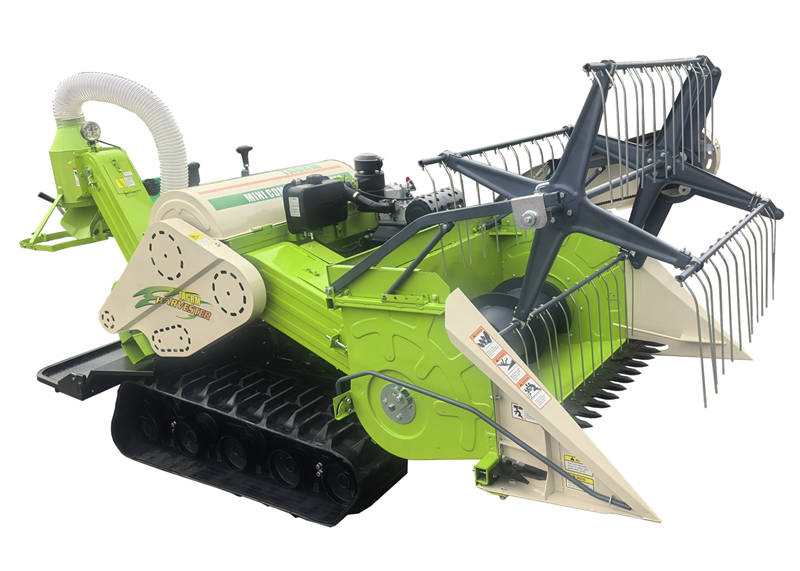
With today's contemporary agricultural production, one of the most essential technologies is the use of mechanized rice harvesting. It has the potential to significantly enhance both the output and the quality of rice while also reducing the amount of manual effort required of the farmers. Nevertheless, to guarantee a trouble-free harvest, several preliminary tasks need to be completed before rice can be harvested using machinery. This article will discuss the steps that need to be taken before rice may be harvested with machinery.
1. To maximize both the efficiency and the security of automated harvesting, it is important to perform the required maintenance and management on rice fields. This involves activities such as removing waste, trimming branches, and cleaning away weeds. These duties have the potential to not only lessen the amount of damage caused to mechanical equipment but also guarantee that the harvester can operate without any obstructions and increase its level of operational efficiency.
2. The selection of appropriate machinery and equipment is necessary for the harvesting of rice using mechanization. This means that the farmer is responsible for selecting an appropriate type of harvester to use based on the growing status of the rice as well as the reason for harvesting it. Wheeled rice harvesters and crawler rice harvesters are the two primary categories of rice harvesters available. Wheel harvesters are more suited for paddy fields in flat locations, whereas crawler harvesters are better suited for complicated terrains such as mountains or wetlands. Wheel harvesters are more common in Southeast Asia. By selecting the appropriate model, one may not only increase the effectiveness of the harvesting process but also protect the farmers' safety.
3. The mechanical equipment must first undergo any necessary overhaul and repair before the rice may be harvested using machinery. This involves cleaning the body and the blades, examining the blades to see if they are damaged or dull, examining the components to determine whether they are intact, and more. The efficiency of the harvesting process as well as the safety of the workers can only be ensured if the mechanical equipment is maintained in excellent operating order.
4. When harvesting rice using machinery, it is important to consider both the time of day and the weather at the time of the activity. The first month after the rice has reached maturity is the ideal period for harvesting with motorized equipment. At this point, the color of the rice grains has changed to yellow, the water content is also at an appropriate level, and the harvesting impact and quality are rather favorable. Alterations in the weather are another factor that may impact how well-automated harvesting is carried out. If it starts to rain heavily or there is a strong wind, the operation has to be halted as soon as possible to prevent any damage to the mechanical equipment and to safeguard the safety of the farmers.
5. Modify the height of the cut and the breadth of the cut.
Adjustments to the rice harvester are necessary to meet the requirements of harvesting, and these adjustments may include adjusting parameters such as the cutting height and cutting width. In general, the harvesting height should be between 5 and 10 centimeters, and the cutting width should be adjusted according to the performance of the machine and the density of the rice.
Rice growers have a lot of work to perform in preparation for harvesting the crop before it can even begin. Checking the equipment, determining when the harvest should take place, deciding where to store the rice, and cleaning the area where it will be harvested are all examples of these preparations. When it comes to harvesting, farmers may only receive the finest crop if they make certain preparations beforehand.
5 Preparations before mechanized rice harvesting
2023 03/10