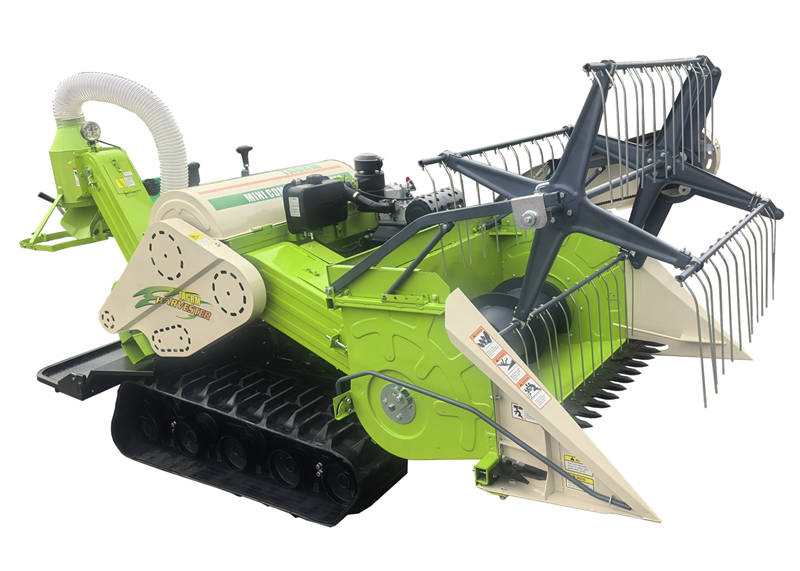
Farmers cannot employ huge harvesters to focus on harvesting activities in various complex terrains, including mountainous, basin, hilly, and other types of terrain. As a result, small combine harvesters came into existence. With further research and development, smaller combine harvesters will play an increasingly important part in the agriculture of the future. The benefits that it offers to small farmers are mostly expressed in the following five aspects:
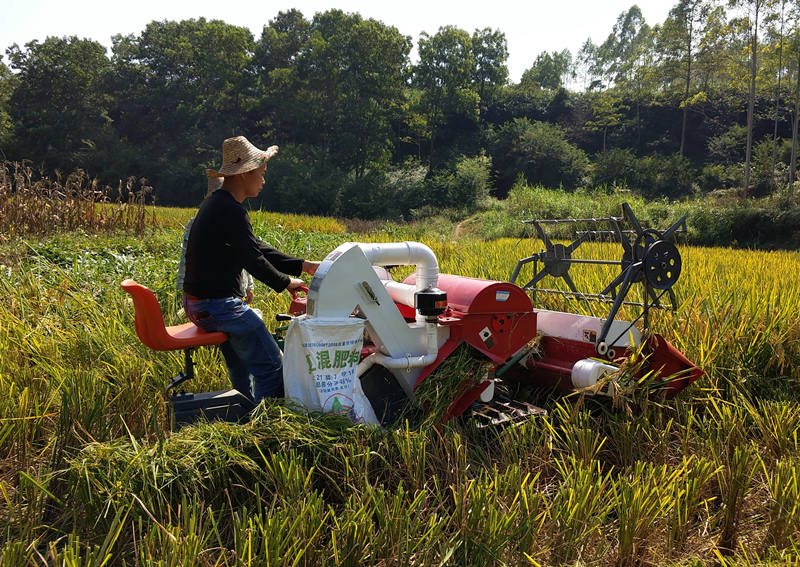
4LZ-1.2 mini rice combine harvester
1. Cost
The purchase of big combine harvesters represents a significant financial commitment that is sometimes out of reach for smaller farms. Small combine harvesters, on the other hand, may be purchased for a lesser price and have purchase and running expenses that are more acceptable. Compact combine harvesters are also extremely simple to maintain, which may help decrease the extra expenditures that are incurred when machines break down. In addition, harvesting crops using conventional agricultural methods often involves a significant amount of personnel, which is a cost that many smaller farms are unable to pay. In particular, during busy harvest seasons, small combine harvesters may save a lot of money on labor expenditures, which is highly significant.
2. Adaptability
Mini combine harvesters are more adaptable, so they can work in a variety of areas and with various kinds of crops. The land size and the intricacy of the terrain will provide problems to the usage of machines, particularly in rural regions; nevertheless, small combine harvesters are better equipped to deal with these issues. Small farmers may improve their harvesting efficiency and output by using smaller machinery that is more able to adapt to the kinds of terrain and crops they work with.
3. Productivity in labor
The labor efficiency of smaller farms may be improved by the use of smaller combine harvesters. The pace at which these machines operate allows for crops to be gathered more quickly, which cuts down on the amount of time and labor required for harvesting by hand. Little machines can also complete operations in a short length of time, which enables smaller farmers to finish a significant amount of harvesting labor in a shorter amount of time. Furthermore, tiny machines may also perform operations in a short period.
4. Encouragement of environmentally responsible farming practices
The use of smaller combine harvesters may encourage sustainable agriculture, which in turn helps to reduce the amount of harm done to the land and the environment. They can better manage issues like soil compaction and erosion, as well as lessen the effect on the environment by decreasing the number of pesticides and fertilizers that are used.
5. Encourage rural economic development
In addition to fostering the growth of rural harvesting services, increasing the number of employment opportunities available to people, better integrating agricultural machinery resources, and enhancing local productivity and economic vitality are all potential benefits of promoting the use of small combine harvesters. This is something that has to be prioritized for the growth of rural areas.
Little combine harvesters, in general, may assist smaller farmers in cutting expenses, increasing the efficiency of their job, better adapting to various kinds of fields and crops, and providing them with a more satisfying and lucrative harvesting experience. Little combine harvesters will play an increasingly significant role in the agricultural industry in the future, providing small farmers with additional options and assistance.